
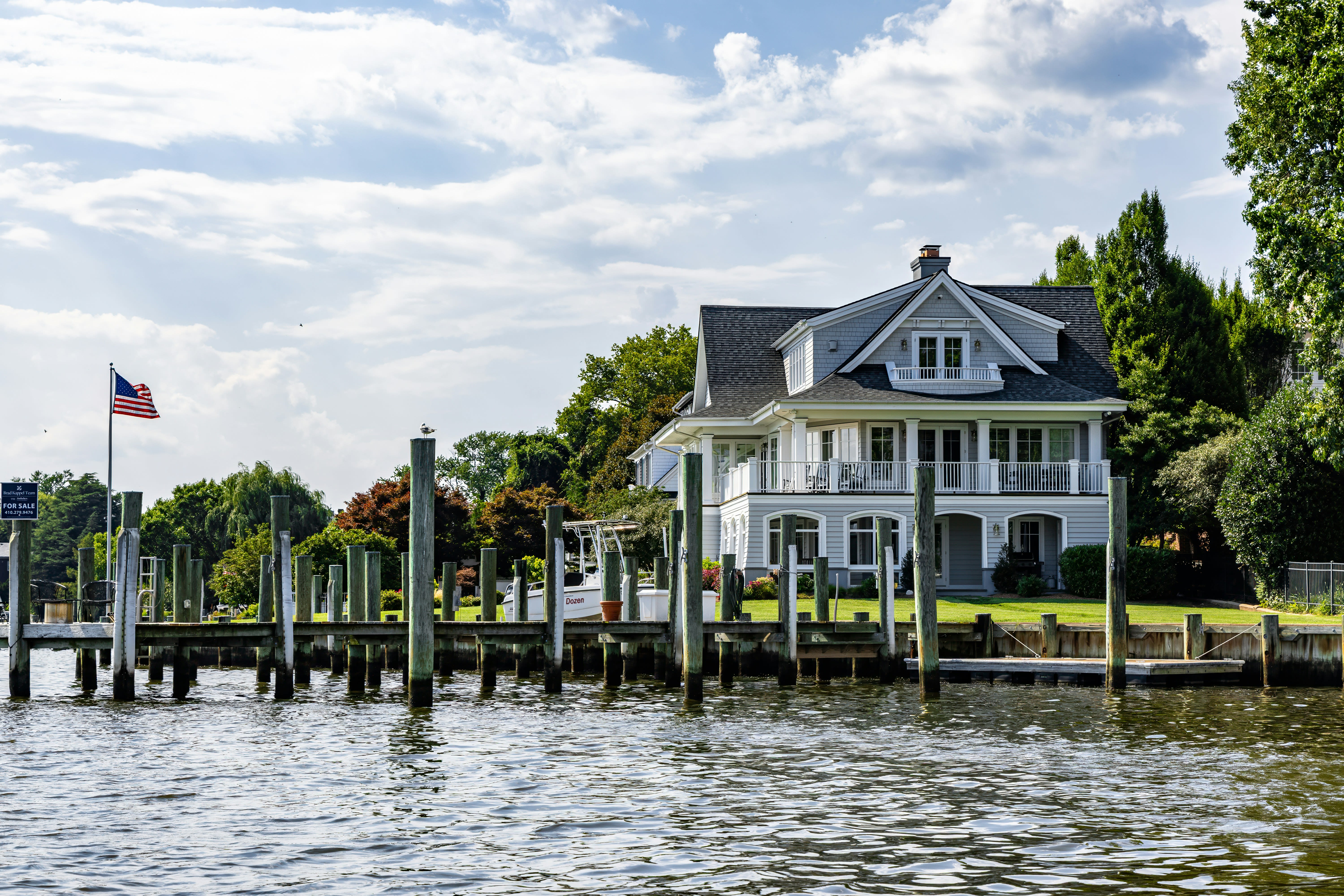

There’s something magnetic about waterfront living.
Maybe it’s the morning light bouncing off the water, the easy access to boating, or simply the peace that comes with having fewer backyard neighbors and more open sky. In North Carolina, waterfront homes continue to attract buyers looking for lifestyle, investment potential, and a little extra breathing room.
From the Intracoastal Waterway to the Albemarle Sound and riverfront communities like Elizabeth City and Edenton, waterfront property remains one of the most desirable segments of the market.
But buying a waterfront home comes with unique considerations.
Before you fall in love with the view, here’s what every buyer should know.
Not All Waterfront Is Created Equal
“Waterfront” can mean a lot of things in North Carolina.
A home listed as waterfront might sit on a canal, a river, the sound, a creek, or even The Intracoastal Waterway. Each type of water access affects your lifestyle and property value differently.
For example, a canal-front home may offer easier boat docking, while riverfront homes often provide bigger views but can have stronger currents or erosion concerns. Sound-front homes may offer broader water access but greater exposure to wind and weather.
Ask questions like:
Is the water navigable year-round?
Does it lead to open water?
Are there bridge restrictions for boats?
These details matter more than the pretty pictures.
Understand Flood Zones Before You Buy
Flood zones are one of the biggest factors in buying waterfront property in North Carolina.
Many waterfront homes fall into FEMA-designated flood zones, which can impact:
Insurance premiums
Lending requirements
Future resale value
Before making an offer, ask for:
The property’s flood zone designation
Current flood insurance costs
Elevation certificates
Claims history if available
A home in a high-risk flood zone isn’t necessarily a bad investment, but it should be part of your financial planning.
Budget for Flood Insurance and Wind Coverage
Standard homeowners insurance usually doesn’t cover flood damage.
That means many waterfront buyers will need a separate flood insurance policy, and in some coastal regions, wind and hail coverage may also be separate.
Insurance costs can vary widely based on:
Elevation
Age of the home
Foundation type
Distance from open water
This is why it’s smart to get insurance quotes early in the buying process instead of waiting until the contract stage.
Inspect the Bulkhead, Dock, and Shoreline
Think of waterfront structures like the bones beneath the beauty.
If the property has a dock, bulkhead, seawall, or boat lift, inspect them carefully.
Repairs can be expensive, and some issues aren’t obvious at first glance.
Key questions:
How old is the dock?
Has the bulkhead been repaired?
Are permits on file for additions?
Is the shoreline stable?
A waterfront home inspection should often include more than just the house itself.
Check for Erosion and Drainage Issues
Waterfront homes live in a constant tug-of-war with nature.
Over time, erosion can impact land stability, landscaping, and even structures. Poor drainage can also create standing water problems after storms.
Walk the property carefully and look for:
Washed-out soil
Leaning trees
Cracks near foundations
Pooling water
In eastern North Carolina, this is especially important in low-lying areas.
Know the Rules for Docks and Water Access
Planning to add a dock or upgrade an existing one?
North Carolina has regulations that may affect what you can build, especially in environmentally protected areas.
Some waterfront improvements may require permits through:
Local municipalities
County planning departments
The North Carolina Division of Coastal Management
The U.S. Army Corps of Engineers
If water access is a major reason for your purchase, verify what’s allowed before closing.
Consider the Long-Term Resale Value
Waterfront homes often hold strong value, but location and maintenance matter.
Buyers tend to pay premiums for:
Deep water access
Updated docks
Higher elevation
Wide water views
Easy boating routes
Homes with difficult access, deferred shoreline maintenance, or expensive flood insurance may narrow your future buyer pool.
Think beyond today’s excitement and consider tomorrow’s marketability.
Waterfront Living in Elizabeth City and Northeastern North Carolina
For buyers searching in northeastern North Carolina, waterfront opportunities are plentiful.
Areas like Elizabeth City, Camden, Currituck, and Hertford offer a mix of:
Canal-front communities
Riverfront homes
Albemarle Sound access
Large lots with private docks
Compared to larger coastal markets, these areas often offer more space and value for buyers who want waterfront living without the premium pricing of Wilmington or the Outer Banks.
Ready to Explore Waterfront Homes?
Buying waterfront property in North Carolina can be incredibly rewarding, and it requires a little more due diligence than your average home purchase.
The right local real estate team can help you understand the details behind the listing, from flood zones to dock permits to resale potential.
If you’re considering waterfront homes in Elizabeth City or the surrounding Albemarle area, Hall & Nixon Real Estate can help you navigate the process and find a property that fits both your lifestyle and your long-term goals.
Because when it comes to waterfront real estate, the view is only part of the story.